The Hidden Key to HVAC Performance
Your home's ductwork acts as the circulatory system for your heated and cooled air. If these hidden pathways—often running through unconditioned attics and crawlspaces—have cracks or leaks, you could be losing 20% to 30% of the conditioned air you pay for before it even reaches your rooms. Duct sealing is the process of closing these leaks and gaps to ensure the air your HVAC system produces is delivered efficiently and safely throughout your North Georgia home
Benefits of Duct Sealing
Significant Energy Savings: Sealing leaks can increase your heating and cooling system's efficiency by up to 20% or more, directly lowering your monthly utility bills.
Enhanced Comfort: It solves common problems like uneven temperatures (hot rooms in summer, cold rooms in winter) by ensuring the conditioned air reaches every register as intended.
Improved Indoor Air Quality: Leaky ducts often pull dirty air from unconditioned spaces (like dusty attics or damp crawlspaces) and circulate it inside your home. Sealing these gaps prevents pollutants, dust, insulation particles, and outdoor allergens from entering your living space.
Increased Safety: Leaky ducts can cause "backdrafting," pulling harmful combustion gases (like carbon monoxide) from furnaces or water heaters back into your home instead of exhausting them outside.
Extended HVAC Lifespan: When your system is not fighting to compensate for lost air, it runs less frequently and under less strain, extending its service life and reducing the need for costly repairs.

Our Process
System Inspection and Testing: A professional performs an air duct test using specialized equipment (like pressurization tools and sensors) to determine the severity and location of the leaks throughout the system. This process identifies problems virtually undetectable otherwise.
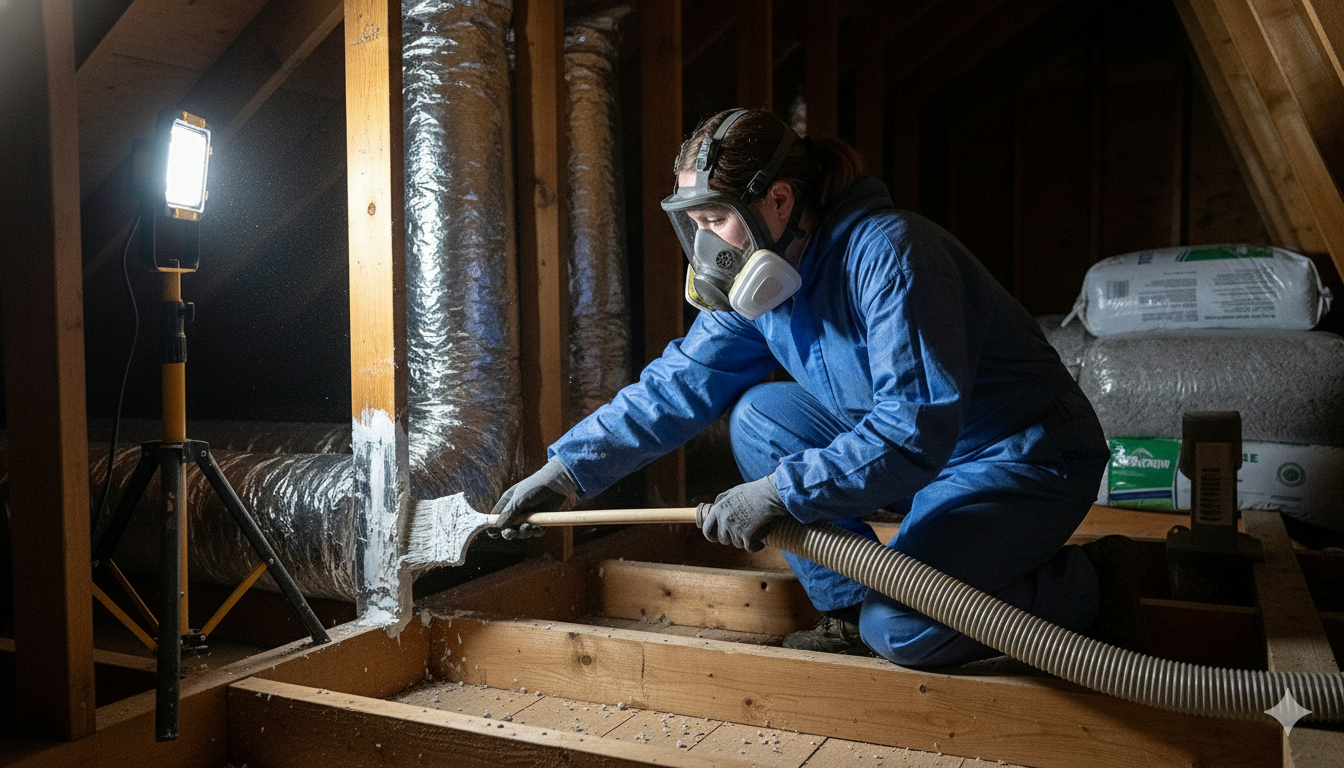
Targeting and Preparation: Technicians access the ductwork, primarily focusing on joints, seams, and connections in the attic, crawlspace, and unfinished basement. The areas to be sealed are typically cleaned of dust and debris to ensure the sealant adheres properly.
Application of Sealant: Depending on the location and size of the leak, professionals use durable, long-lasting materials:
Duct Mastic: A flexible, non-toxic, and flame-resistant paste applied with a putty knife or brush to seal large seams and joints.
Foil/Metallic Tape: Specifically designed for HVAC systems and applied firmly over small, accessible seams. (Note: We never use standard cloth duct tape, which deteriorates quickly).
Aerosol Sealants (e.g., Aeroseal): For ducts in inaccessible areas (like those inside walls), a fine polymer mist is injected into the pressurized system. The particles collect on the edges of the leaks, sealing them from the inside.
Verification and Final Test: Once sealing is complete, the duct system is re-tested (pressure testing) to verify the effectiveness of the work and confirm the air loss has been minimized to meet efficiency standards.